Packing List Apps: How to Digitally Organize Your Luggage easily
A great travel packing list app can be the difference between breezing through the airport with a perfectly packed carry-on and standing at the check-in desk paying avoidable baggage fees. Whether you’re a weekend city-breaker flying out of London or a long-haul backpacker heading across continents, the right digital packing checklist keeps you organised, lightweight, and in control from the moment you start preparing.
In this guide, we break down exactly how these smart packing assistants work, what features to look for, and — most importantly — how to use them to pack smarter, travel lighter, and never pay a surprise baggage surcharge again. These seven practical tips will transform your pre-trip routine instantly.
How a Travel Packing List App Works
A modern travel packing list app is far more than a simple digital notepad. Today’s best tools function as a full smart packing assistant — they ask you questions about your destination, trip duration, planned activities, and even the local weather forecast, then generate a personalised checklist tailored to your specific trip.
Most apps follow a straightforward flow: you input your destination, travel dates, and the type of trip (business, beach, hiking, city break), and the tool produces an itemised list grouped by category — clothing, toiletries, documents, electronics, and so on. You then check items off as you pack them into your bag.
Weather-Based Recommendations
One of the most powerful features in a quality packing checklist app is weather-based packing. Rather than guessing whether you need a light jacket or a full winter coat, the app pulls the forecast for your destination and automatically adjusts clothing suggestions. Travelling to Bangkok in March? It’ll skip the thermals. Heading to Edinburgh in November? It’ll remind you to pack waterproofs and layers.
This feature alone saves enormous space and weight — two things that matter greatly when you’re trying to fly carry-on only with budget airlines.
Activity-Based Packing
Activity-based packing means your list adapts to what you actually plan to do. A hiking trip generates different suggestions than a city sightseeing break. Enter that you’re planning cultural tours, museum visits, and street food exploration, and the app omits the snorkelling gear while adding comfortable walking shoes and a compact daypack to your digital packing list.
Trip Duration Packing
Trip duration packing is another smart calculation these tools perform well. A 3-night weekend trip calls for entirely different quantities than a 3-week adventure. Good apps recommend the minimum number of clothing items needed — factoring in laundry access — so you never over-pack “just in case.”
Key Features of the Best Travel Packing List Apps
Not all packing apps are created equal. Here are the features worth prioritising when choosing your packing list generator:
Customisation Options
The ability to add, remove, and rearrange items is essential. A good luggage organiser app lets you build templates for different trip types — business travel, backpacking, family holidays — so you’re not starting from scratch every time. Some tools even let you create a printable packing list you can export as a PDF, which is handy for offline use.
For travellers who rely on their phones while abroad, pairing your packing app with the best offline travel apps ensures you stay organised even without internet access.
Airline Baggage Allowance Integration
This is a game-changer for budget travellers. Airline baggage allowance integration means the app knows the cabin bag dimensions and weight limits for major carriers — Ryanair, EasyJet, Wizz Air, British Airways, and more — and alerts you when your estimated pack weight approaches the limit. You can check whether your planned items fit within a specific airline’s carry-on rules before you even start packing.
This feature directly supports packing to avoid checked bag fees, which can add £20–£60 per journey on budget European routes. Over a year of regular travel, that’s a significant saving.
What to Pack: Building Your Smart Packing Checklist
Using a travel packing list app effectively means understanding the core categories every trip demands. Here’s how to structure your checklist for maximum efficiency:
- Documents & Money: Passport, boarding passes, travel insurance, visa copies, local currency, cards
- Clothing: Weather-appropriate layers, versatile neutral pieces, one smart outfit, underwear and socks (4–5 days’ worth)
- Toiletries: Travel-size containers (≤100ml for carry-on), solid shampoo bars, multi-use products
- Electronics: Phone charger, universal adapter, portable power bank, earphones
- Health: Prescription medication, basic first aid, hand sanitiser, reusable water bottle
- Comfort: Neck pillow, eye mask, earplugs for long-haul flights
A good packing list creator will populate most of these automatically and let you refine quantities based on your trip duration and destination climate.
Budget Packing Tips for Cheap Flights
Packing smart is inseparable from travelling cheaply. Every gram over your airline’s limit costs money, and every item you don’t need wastes space that forces you into a checked bag. Here’s how to use your packing app as a genuine money-saving tool:
- Choose multi-use items: A sarong doubles as a towel, blanket, and beach mat. Pack items that serve two or three purposes.
- Use solid toiletries: Solid shampoo, conditioner, and soap bars weigh less, don’t count toward your 100ml liquid allowance, and last longer.
- Roll, don’t fold: Rolling clothes reduces volume by up to 30% compared with folding, letting you fit more into a smaller bag.
- Weigh as you pack: Use a digital luggage scale (under £10 online) alongside your packing app to verify your bag weight before leaving home.
- Buy at destination: Sunscreen, shampoo, and other bulky toiletries are cheaper bought locally than checked through in luggage.
Affordable luggage solutions also play a big role. You don’t need an expensive suitcase — a quality 40-litre backpack that fits within most airline cabin bag restrictions costs as little as £25–£40 and handles most short-to-medium trips comfortably. See our complete guide to choosing the perfect travel backpack on a budget for detailed recommendations.
Carry-On Only Packing Strategies
Flying carry-on only is the single most effective way to reduce travel costs and stress. No waiting at baggage reclaim, no risk of lost luggage, no surprise fees — and you can book the cheapest fare class on any airline without worrying about bag upgrades.
Here’s how to make a carry-on organiser approach work for virtually any trip:
- Know your airline’s exact dimensions: Ryanair allows 40×20×25cm for free; EasyJet allows 45×36×20cm. Your app should flag this automatically.
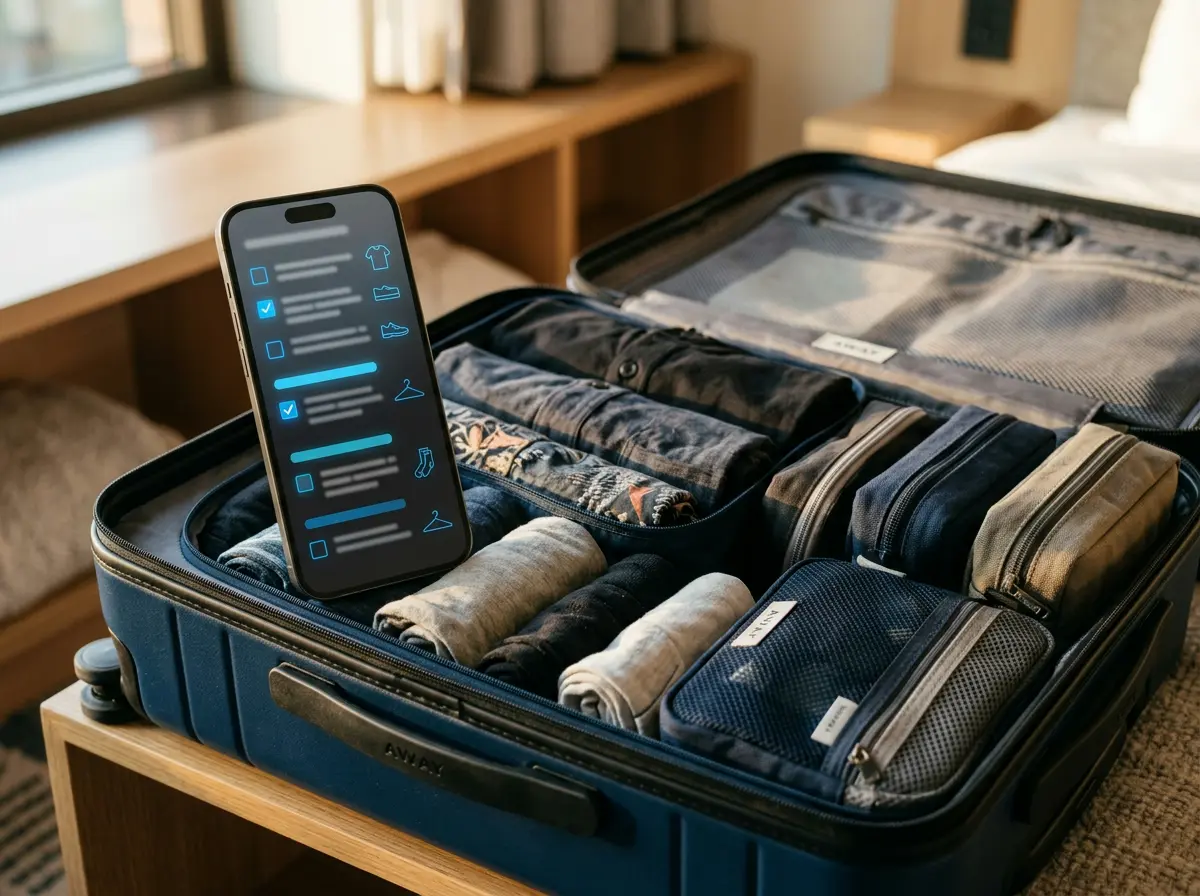
- Use packing cubes: These compress clothing and keep your bag organised. A set of three lightweight cubes weighs under 200g and transforms suitcase organisation entirely.
- Apply the 5-4-3-2-1 rule: 5 pairs of socks/underwear, 4 tops, 3 bottoms, 2 pairs of shoes, 1 jacket. This formula works for trips up to two weeks.
- Wear your bulkiest items on travel days: Heavy boots, your thickest jumper, and your jacket should be on your body at the airport, not in your bag.
- Pack a foldable tote bag: Weighing just 50–80g, a foldable bag becomes your personal item slot on flights that allow one bag plus one personal item.
The best vacation packing apps let you set a “carry-on only” mode that automatically filters out items exceeding typical cabin bag weight limits (usually 7–10kg) and flags items that would push you over.
Long-Term Travel & Backpacker Packing Lists
Long-term travel packing lists have a completely different logic from short-trip lists. When you’re travelling for months rather than days, the goal shifts from “pack for every scenario” to “pack the minimum and replace or wash as you go.”
Backpacker Packing Apps: What to Look For
Dedicated backpacker packing apps often include features specifically suited to long-haul, multi-destination travel. Look for tools that allow you to:
- Create multi-destination lists (e.g., tropical Thailand followed by cool Nepal)
- Track items you’ve used versus items still untouched (a sign you over-packed)
- Set reminders to restock medication or travel essentials mid-trip
- Share lists with travel companions to avoid duplicating shared items like first aid kits or power adapters
For minimalist travel packing, the golden rule is: if you haven’t used it in the first week, mail it home or leave it at a hostel’s free shelf. Most things you think you’ll need, you won’t.
Getting Started: Free vs Premium Features
Most leading travel packing list apps offer a free tier that covers the essentials — list creation, weather integration, and basic customisation. Premium upgrades (typically £2–£5/month or a one-time £8–£15 purchase) unlock features like:
- Airline baggage allowance integration for 200+ carriers
- Unlimited saved templates for different trip types
- Cloud sync across devices
- Printable packing list PDF export
- Collaborative lists for group or family travel
- Weight tracking per item
For occasional travellers (2–4 trips per year), the free tier of most apps is more than sufficient. For frequent flyers and backpackers, a premium plan pays for itself the first time it helps you avoid a single checked-bag fee.
What Travellers Are Saying
User reviews of the leading apps consistently highlight three things: the weather-based suggestions save time and prevent overpacking, the airline baggage integration removes pre-trip anxiety, and the ability to save and reuse templates is a long-term time-saver. Negative feedback typically centres on premium pricing and the learning curve of initial setup — both minor issues that resolve after a first or second use.
How to Choose and Download the Right App
The most recommended packing list apps across Android and iOS include PackPoint, TripList, and Packr — all available free on their respective app stores. When choosing, prioritise airline baggage allowance integration and weather-based packing if you travel on a budget or frequently use low-cost carriers. Cross-reference with up-to-date reviews to find the best current version for your device.
Affiliate Disclosure: FlyToAny.com may earn a commission from affiliate links in this article, including flight search tools and partner services. This comes at no extra cost to you and helps us keep producing free travel content. We only recommend tools and services we genuinely believe benefit our readers.