Best places to visit in croatia
Discovering the best places to visit in Croatia offers budget travelers an incredible blend of ancient walled cities, crystal-clear waters, and breathtaking natural landscapes — all without breaking the bank. This Adriatic gem delivers unparalleled value with its mix of UNESCO World Heritage sites, hidden islands, and vibrant cultural experiences that rival more expensive European destinations.
From the stunning Dalmatian Coast to the lush inland national parks, Croatia presents budget travelers with countless opportunities to experience Mediterranean beauty at a fraction of the cost. This guide will show you how to explore Croatia’s most magnificent destinations while keeping your spending in check.
Dubrovnik: Pearl of the Adriatic
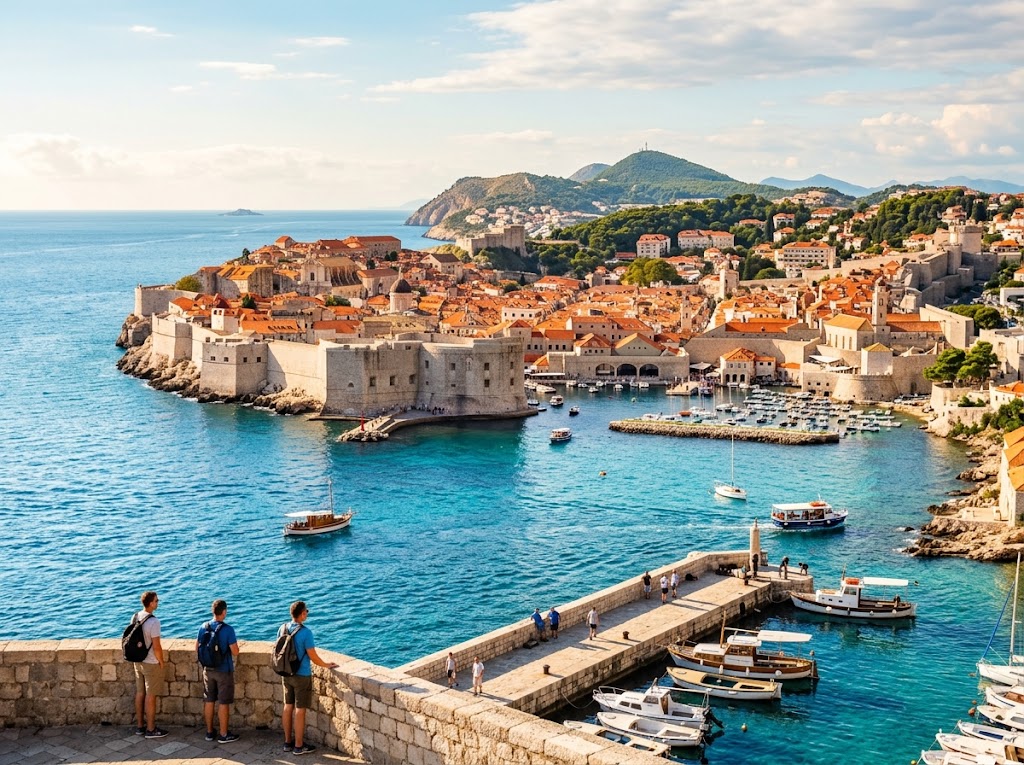
The ancient walled city of Dubrovnik is among the best places to visit in Croatia, with its limestone streets and baroque buildings that transport visitors back in time. Despite its popularity (especially since becoming a major Game of Thrones filming location), there are still ways to explore this coastal gem on a budget.
Budget-Friendly Activities in Dubrovnik
Walking the city walls is a must-do experience, offering spectacular views of the terracotta rooftops against the blue Adriatic. While the wall walk costs around 250 HRK (about €33), it’s worth every cent for the incredible panoramas and photo opportunities. To save money, visit in the late afternoon when crowds thin out.
For free activities, explore the marble streets of the Old Town, especially early morning before the cruise ship crowds arrive. The stunning architecture and atmosphere can be enjoyed without spending a kuna.
Budget travelers should consider staying in Lapad or Gruž neighborhoods, just a short bus ride from the Old Town, where accommodation prices drop by 30-50%. Local buses cost just 15 HRK (€2) one-way, making these areas convenient and economical bases.
Split: Ancient History Meets Beach Life
Split offers an incredible balance of historical sites, beautiful beaches, and affordability, making it one of the best places to visit in Croatia for budget-conscious travelers. The heart of the city is Diocletian’s Palace, a UNESCO World Heritage site where you can wander for hours among ancient Roman ruins that now house cafes, shops, and homes.
Budget Activities in Split
Unlike many European historical sites, most of Diocletian’s Palace can be explored for free. Wander the labyrinthine streets and discover hidden courtyards, ancient columns, and vibrant local life. The only paid sections are the basement halls (60 HRK/€8) and the Cathedral bell tower (25 HRK/€3.30).
Split’s beaches provide free entertainment with crystal-clear waters. Bačvice Beach is walking distance from the Old Town, while slightly further Kašjuni and Kaštelet beaches offer more tranquil settings.
For accommodation, look beyond the palace walls to neighborhoods like Veli Varoš or Lučac where you’ll find budget-friendly apartments and hostels. Many budget travelers can easily manage on under $500 a week in Split with careful planning.
Zagreb: Croatia’s Affordable Capital
Often overlooked in favor of coastal destinations, Zagreb is actually one of the best places to visit in Croatia for budget travelers. The capital city offers excellent value with its blend of Habsburg-era architecture, thriving café culture, and fascinating museums — all at prices significantly lower than the coast.
Budget-Friendly Zagreb Attractions
Start with the Museum of Broken Relationships (40 HRK/€5.30), a uniquely Croatian cultural experience that won’t break the bank. The Upper Town’s historic streets can be explored for free, including St. Mark’s Church with its iconic tiled roof and the panoramic Strossmayer Promenade.
Dolac Market, Zagreb’s vibrant central market, is perfect for sampling local produce and specialties at affordable prices. Many of the city’s green spaces like Maksimir Park offer free recreation opportunities with lovely walking paths and lakes.
Zagreb’s accommodation costs are typically 30-40% lower than coastal hotspots like Dubrovnik or Hvar. The city also boasts excellent public transportation with tram tickets costing just 4 HRK (€0.50) for 30 minutes, making it easy to explore efficiently.
Plitvice Lakes National Park: Natural Wonder
The breathtaking Plitvice Lakes National Park stands as one of the best places to visit in Croatia for nature lovers, with its terraced lakes and cascading waterfalls creating an otherworldly landscape. While the entrance fee is substantial (300 HRK/€40 in peak season), smart budget travelers can maximize their visit with proper planning.
Visiting Plitvice Lakes on a Budget
To save significantly, visit during the off-season (November-March) when entrance fees drop to 80 HRK (€10.60). The scenery remains beautiful, especially with fall colors or a dusting of snow in winter. Another money-saving strategy is to arrive after 4 pm in summer for a reduced entrance fee and fewer crowds.
Pack a picnic lunch to avoid the overpriced park restaurants, and consider spending a full day to get maximum value from your entrance fee. The park offers routes of varying lengths, so you can tailor your visit to your energy level and interests.
Getting to Plitvice can be affordable by taking a bus from Zagreb (about 100 HRK/€13 one-way), and the journey takes approximately 2.5 hours through scenic countryside. This national park showcases Croatia’s natural beauty in a way that coastal areas cannot match.
Istria Region: Budget-Friendly Gem
The heart-shaped Istria peninsula in northwestern Croatia is one of the best places to visit in Croatia for travelers seeking value. Often compared to Tuscany but at a fraction of the price, Istria offers hilltop towns, Roman ruins, truffle-rich forests, and pristine coastlines without the high costs of more famous regions.
Affordable Istrian Destinations
Rovinj serves as Istria’s postcard-perfect coastal town with its colorful buildings and cobbled streets. While not the cheapest destination, visiting outside July-August brings reasonable prices. For real budget value, explore the interior towns like Motovun and Grožnjan, where you’ll find charming accommodation for as little as €40-50 per night.
In Pula, the well-preserved Roman amphitheater (the Arena) costs 70 HRK (€9.30) to enter — a bargain compared to similar ancient sites elsewhere in Europe. Many of the other Roman ruins throughout the city can be viewed for free.
Budget travelers will appreciate that many Istrian beaches are free to access, unlike some other Mediterranean destinations. The public buses connect major towns efficiently, with fares between Pula and Rovinj costing around 40 HRK (€5.30).
Croatian Islands: Affordable Island Hopping
The Croatian islands rank among the best places to visit in Croatia, offering incredible natural beauty and authentic experiences that can be enjoyed on a budget. With over 1,000 islands, smart travelers can find value by looking beyond the most famous destinations.
Hvar: Balancing Beauty and Budget
Hvar is undeniably beautiful but has a reputation for being Croatia’s priciest island. Budget travelers should stay in Stari Grad or Jelsa instead of Hvar Town, where accommodation costs drop by 40-50%. These charming towns offer authentic experiences with easy bus connections to Hvar Town.
Free activities abound on Hvar, from swimming at beaches like Dubovica to hiking the lavender fields in the island’s interior. In Hvar Town, climb to the Spanish Fortress for panoramic views for just 40 HRK (€5.30) — one of the best value viewpoints in Croatia.
Korčula: Affordable Alternative
Korčula offers similar beauty to Hvar but at lower prices, making it ideal for budget travelers. The medieval walled town of Korčula resembles a mini-Dubrovnik without the crowds or prices. Accommodation in family-run guesthouses starts around €40 in shoulder season.
Explore the alleged birthplace of Marco Polo, wander the fishbone-patterned streets, and enjoy local wines that cost a fraction of what you’d pay elsewhere. The public beaches surrounding Korčula Town provide free relaxation with spectacular views.
Vis and Mljet: Budget Hidden Gems
For truly budget-conscious travelers, consider the more remote islands like Vis and Mljet. Vis remained closed to tourists until 1989 as a military base, preserving its authenticity. Today, it offers excellent value with secluded beaches, historic towns, and affordable konobas serving fresh seafood.
Mljet, with its national park covering the western third of the island, charges 125 HRK (€16.60) for entrance, including boat transport to the monastery on St. Mary’s Island. While not free, a full day exploring the salt lakes, cycling the park paths, and swimming makes it worthwhile.
Zadar: Coastal Charm Without Crowds
Zadar strikes the perfect balance as one of the best places to visit in Croatia, combining historic architecture, modern installations, and affordability. This coastal city offers many of the same attractions as Dubrovnik and Split but with fewer tourists and lower prices.
Budget Attractions in Zadar
Zadar’s most famous attractions are actually free. The Sea Organ, an architectural sound art installation where ocean waves create random but harmonic sounds, costs nothing to enjoy. Nearby, the Sun Salutation solar-powered light display provides free evening entertainment.
The Roman Forum and St. Donatus Church can be admired from the outside without charge, while entrance to the bell tower costs just 20 HRK (€2.65) for spectacular views. The city’s compact historic center can be thoroughly explored on foot in a day.
Zadar’s popularity has been growing, but accommodation prices remain 25-35% lower than Dubrovnik. The city also makes an excellent base for day trips to nearby Krka National Park, where swimming is permitted beneath the waterfalls (unlike at Plitvice).
When to Visit Croatia on a Budget
Timing your visit is crucial when exploring the best places to visit in Croatia on a limited budget. The high season (July-August) sees prices skyrocket by 30-100% for accommodation and increased crowds at major attractions.
Shoulder Season: May-June and September-October
For the perfect balance of good weather and affordability, visit during the shoulder seasons. In May-June and September-October, the Adriatic Sea is warm enough for swimming, temperatures remain pleasant (20-25°C), and prices drop significantly. Accommodation can be 30-50% cheaper than peak season rates.
These periods also offer more authentic experiences as locals aren’t overwhelmed with tourist crowds. Restaurant tables are easier to find, attractions less crowded, and locals more relaxed and willing to engage with visitors.
Off-Season: November-April
True budget travelers should consider winter visits, particularly to cities like Zagreb and Split which maintain vibrant atmospheres year-round. Coastal towns can be very quiet, with many restaurants and accommodations closed, but the trade-off is rock-bottom prices and crowd-free experiences.
December brings Christmas markets to Zagreb and other cities, creating a festive atmosphere with affordable mulled wine and local foods. Winter accommodation in Dubrovnik can cost 70% less than summer rates, making even this premium destination accessible to budget travelers.
Budget Transportation in Croatia
Getting around affordably is essential when visiting the best places to visit in Croatia on a budget. The country offers several economical transportation options that help stretch your travel funds further.
Buses: Croatia’s Budget Transportation Backbone
Croatia’s extensive bus network is reliable, comfortable, and cost-effective. Intercity buses connect all major destinations, with Zagreb to Split costing around 120-180 HRK (€16-24) one-way. Book tickets a few days in advance through GetByBus or FlixBus websites for the best rates.
Within cities, local buses are very affordable. Zagreb’s tram system costs just 4 HRK (€0.50) for 30-minute tickets, while Split and Dubrovnik city buses run around 12-15 HRK (€1.60-2) per journey.
Ferries: Island Hopping on a Budget
The state-run Jadrolinija ferry company offers the most economical way to reach Croatia’s islands. Foot passenger tickets start from just 15-40 HRK (€2-5.30) for shorter routes. For example, the Split to Hvar ferry costs around 55 HRK (€7.30) for foot passengers.
Consider catamaran services for faster island connections, though they cost slightly more than traditional ferries and don’t carry cars. Booking ferry tickets 1-2 days in advance is recommended during high season.
Car Rental Considerations
While buses and ferries work well for popular routes, a rental car offers flexibility for exploring rural areas and making the most of limited time. Low-season rates start around €20-30 per day, but expect to pay €50+ in summer.
To save on car rentals, book well in advance, opt for pickup/drop-off at the same location to avoid one-way fees, and consider renting only for specific portions of your trip when public transportation isn’t convenient. Travelers needing a Schengen visa should ensure their documentation covers vehicle rental requirements.
Money-Saving Croatia Travel Tips
Making the most of your visit to the best places to visit in Croatia requires some budget-savvy strategies. These practical tips will help you experience this beautiful country without overspending.
Accommodation Strategies
Look beyond hotels to save significantly. Private accommodations known locally as “sobe” (rooms) or “apartmani” (apartments) offer excellent value, especially for stays of 3+ nights when owners often provide discounts. These can be found on booking platforms or, for even better rates, by looking for “Zimmer Frei” or “Apartmani” signs in windows upon arrival in smaller towns.
Hostels in major cities offer dorm beds from €15-25, while budget hotels and guesthouses generally start around €40-60 in shoulder season. Staying just 10-15 minutes’ walk from main attractions can reduce accommodation costs by 20-30%.
Dining on a Budget
Croatia offers excellent food value if you know where to look. Marenda (working-class lunch specials) available from 11am-2pm in konobas and local restaurants offer hearty meals for 60-80 HRK (€8-10.60), often including a small beverage.
Self-catering saves substantial money, especially for breakfast and some dinners. Fresh produce, bread, and cheese from local markets and bakeries create affordable meals. A burek (savory pastry) from a bakery costs just 10-15 HRK (€1.30-2) and makes a filling breakfast or snack.
Tap water in Croatia is safe to drink, so refill a water bottle instead of buying bottled water. Many towns have public water fountains where you can refill for free.
Free and Low-Cost Activities
Many Croatian cities offer free walking tours where you simply tip the guide what you think the tour was worth. These provide excellent orientation and local insights at minimal cost.
Beaches throughout Croatia are generally free to access, providing days of enjoyment without spending anything. Pack a snorkel mask to explore the crystal-clear waters and marine life at no cost.
For cultural experiences, check museum websites for free admission days — many state museums have one free day per month. Churches are typically free to enter (though some famous ones like Euphrasian Basilica in Poreč have small entrance fees for non-worshippers).
| Category | Daily | 7-Day Total | Notes |
|---|---|---|---|
| Accommodation | €25-40 | €175-280 | Hostels/private rooms, less in off-season |
| Food | €20-30 | €140-210 | Mix of self-catering and affordable restaurants |
| Transportation | €10-15 | €70-105 | Public buses, occasional ferries |
| Attractions | €5-15 | €35-105 | Museums, national parks, some free activities |
| Miscellaneous | €5-10 | €35-70 | Souvenirs, coffee, ice cream |
| Total | €65-110 | €455-770 | Varies by location and season |
Croatia delivers exceptional value compared to many Western European destinations. By visiting the best places in Croatia with these budget strategies, travelers can experience the country’s stunning beauty without financial strain.
Whether you’re wandering Dubrovnik’s ancient walls, swimming in Split’s azure waters, or hiking through Plitvice’s lush forests, Croatia rewards budget travelers with unforgettable experiences that feel much more premium than their price tags suggest.
For budget travelers, exploring Croatia’s treasures is all about timing, smart transportation choices, and prioritizing experiences over luxury. With the right approach, this Adriatic paradise provides world-class experiences at prices that allow travelers to stay longer and see more.
Find free walking tours in major Croatian cities to get oriented with local guides who work for tips, offering excellent value while supporting the local economy.