How to Avoid Excess Baggage Fees Every Time
Smart travelers know the best avoid baggage fees tips can save hundreds of dollars per year on airline charges. With airlines increasingly strict about luggage weight limits and carry-on restrictions, knowing how to navigate baggage allowance rules has become essential for budget-conscious travelers.
Baggage fees have skyrocketed in recent years, with major airlines charging $30-75 for the first checked bag and even more for overweight luggage. But with the right strategies, you can consistently avoid these charges while still packing everything you need for your trip.
Know Your Airline’s Baggage Rules Inside Out
Understanding specific airline policies is the foundation of any successful baggage fee avoidance strategy. Each airline has different weight limits, size restrictions, and fee structures that change regularly.
Budget airlines like Spirit, Frontier, and Ryanair have the strictest baggage allowance rules. Spirit charges $65 for a carry-on at the gate, while their checked baggage fees start at $37 online but jump to $75 at the airport. Meanwhile, full-service carriers like Delta and American typically include one carry-on but charge $30 for the first checked bag on domestic flights.
International routes have different rules than domestic flights. European budget airlines often allow smaller carry-on dimensions (55cm x 40cm x 20cm) compared to US airlines. Airlines are increasingly strict about carry-on enforcement, making it crucial to check current policies before each trip.
Military personnel, airline credit card holders, and elite status members often receive baggage fee waivers. Chase Sapphire and American Express airline cards frequently include free checked bags as a primary benefit, potentially saving $240+ per year for frequent travelers.
Master the Art of Packing Smart and Light
Effective packing strategies can dramatically reduce luggage weight while maximizing space efficiency. The key is selecting versatile items and using proven organizational techniques.
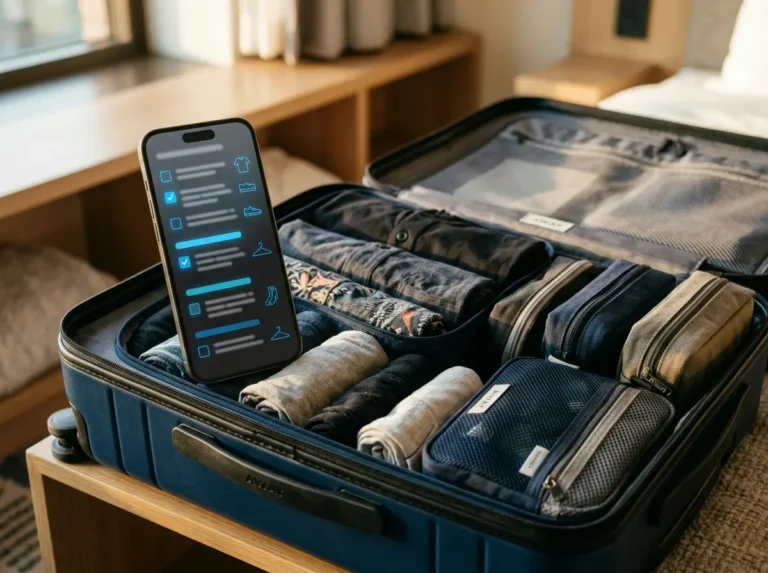
Packing cubes are game-changers for weight distribution and organization. They compress clothing by up to 30% while making it easier to stay within weight limits. Roll clothes instead of folding to save 20-25% more space, and choose wrinkle-resistant fabrics that don’t require heavy accessories.
Limit yourself to 2-3 pairs of shoes maximum, wearing your heaviest pair during travel. Shoes often account for 20-30% of luggage weight, so this simple rule can keep you well under airline limits. Choose versatile footwear that works for multiple activities and dress codes.
Avoid packing “just in case” items that you probably won’t use. Stick to essentials and remember that you can buy forgotten items at your destination. This mindset shift alone can eliminate 15-20 pounds from typical overpacking habits.
Choose lightweight luggage materials. Hard-shell polycarbonate cases weigh 2-3 pounds less than traditional hard cases, while soft-sided bags can be even lighter. Every pound of luggage weight matters when you’re approaching airline limits.
Use Carry-On Maximization Strategies
Maximizing your carry-on allowance is one of the most effective ways to implement avoid baggage fees tips without compromising on what you bring. Most airlines allow both a carry-on bag and personal item, effectively doubling your free luggage capacity.
Your “personal item” can be surprisingly large — most airlines allow bags up to 18″ x 14″ x 8″. A large backpack, oversized purse, or camera bag can hold 2-3 days worth of clothes plus electronics and valuables. This strategy is particularly valuable for short trips where you might avoid checked luggage entirely.
Ready to book your next trip?
Search live flight prices and compare baggage policies — powered by Aviasales
Search Flights Now →Duty-free shopping bags don’t count toward carry-on limits on most airlines. Purchase items at the airport and use the shopping bags as additional carry-on space for last-minute items or souvenirs on your return trip.
Invest in a high-quality carry-on that maximizes airline size limits. The standard 22″ x 14″ x 9″ dimensions can hold 7-10 days worth of efficiently packed clothing. Choosing the right luggage size makes a significant difference in your packing capacity.
Weighing Your Luggage at Home
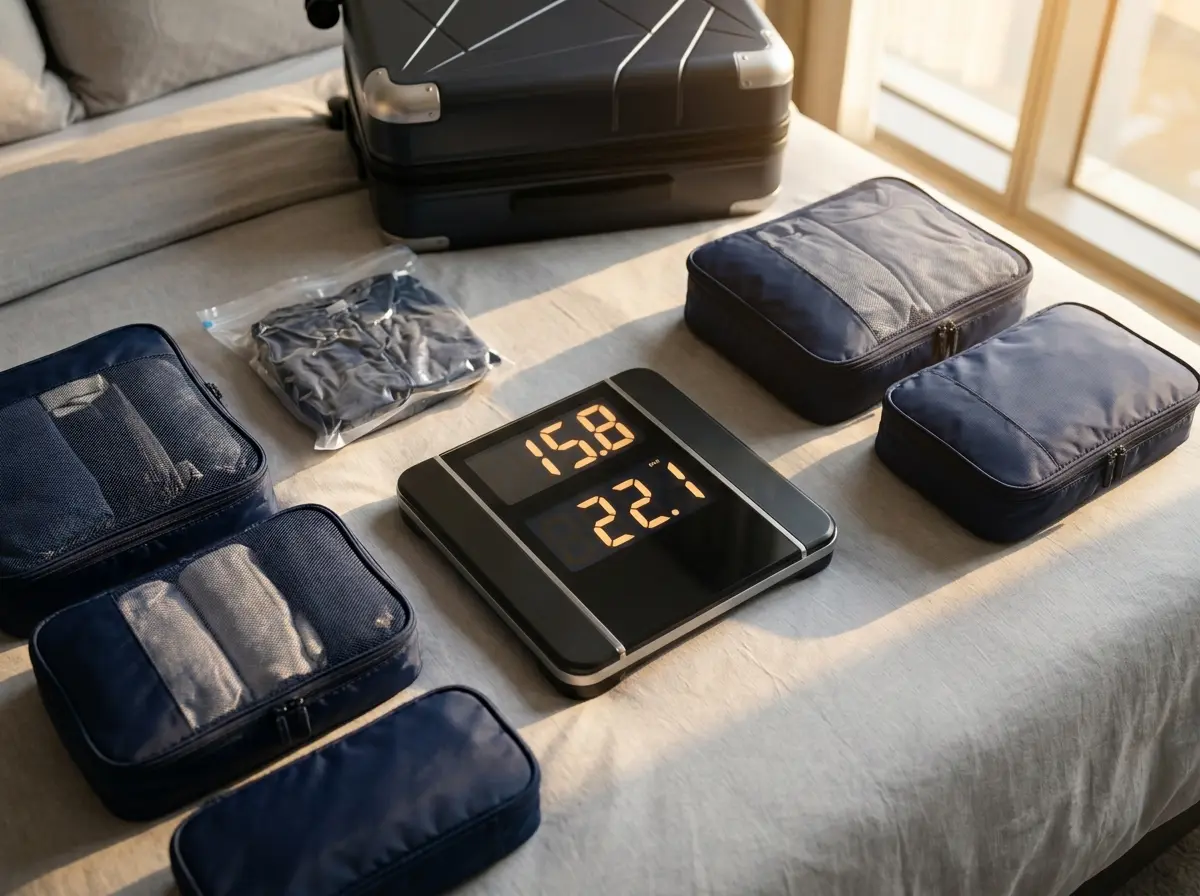
Portable luggage scales are essential tools for avoiding overweight fees. These $10-15 devices can save you $100+ in surprise charges at the airport.
Weigh your luggage 24 hours before departure, not right before leaving for the airport. This gives you time to redistribute items or remove unnecessary weight without the stress of last-minute repacking.
Use your bathroom scale as a backup method: weigh yourself holding the bag, then subtract your body weight. While less precise than dedicated luggage scales, this method works in a pinch and helps you stay within the general weight range.
Pocket Stuffing Techniques That Work
Strategic pocket stuffing can relocate 3-5 pounds from your luggage to your body without additional fees. This technique works best for dense, heavy items that don’t add bulk.
Fill jacket pockets with batteries, chargers, and small electronics. These items are heavy but compact, making them perfect for pocket storage. A laptop charger alone weighs 1-2 pounds and easily fits in a coat pocket.
Wear your heaviest clothes and boots during travel. That winter coat weighs 2-4 pounds, and hiking boots can add another 2-3 pounds to your luggage weight. Wearing them instead saves significant luggage space and weight.
Cargo pants and jackets with multiple pockets are invaluable for this strategy. Some travel-specific clothing includes 15+ pockets designed for exactly this purpose, allowing you to carry substantial weight without it counting toward baggage limits.
Pre-paying Online vs Paying at Counter
Airlines consistently charge 30-50% more for baggage fees at the airport compared to online prepayment. This pricing structure is designed to encourage advance planning and reduce check-in delays.
Spirit Airlines exemplifies this pricing gap: carry-on bags cost $37 online but $65 at the gate. United charges $30 for online bag fees but $40 at the airport. These differences add up quickly, especially for families or longer trips requiring multiple bags.
Book baggage during initial ticket purchase for the lowest rates. Many airlines offer bundle deals that include bags, seat selection, and other perks at discounted rates compared to buying each service separately.
Alternative Shipping Options
Sometimes shipping luggage separately costs less than airline baggage charges, especially for heavy items or extended trips. This approach requires advance planning but can result in significant savings.
UPS and FedEx ground shipping often costs $25-50 for packages up to 50 pounds, competitive with airline checked bag fees. For international destinations, shipping can be more expensive, but it eliminates weight restrictions and reduces airport hassle.
Luggage shipping services like Ship My Luggage specialize in travel logistics and often provide door-to-door service to hotels. They handle customs paperwork for international shipments and offer tracking throughout the process.
Consider shipping winter gear or specialized equipment separately. Ski equipment, diving gear, or bulky winter clothing can easily exceed airline weight limits. Shipping these items directly to your destination eliminates overweight fees and frees up luggage space for essentials.
Airline-Specific Baggage Hacks
Each airline has unique policies that savvy travelers can leverage. Understanding these airline-specific strategies helps you avoid baggage fees tips that work consistently across different carriers.
Southwest remains the major exception to baggage fees, allowing two free checked bags up to 50 pounds each. This policy makes Southwest extremely competitive for family travel or trips requiring substantial luggage, even when their base fares appear higher than competitors.
Delta allows larger carry-on dimensions (22″ x 14″ x 9″) compared to strict budget airlines. Their SkyMiles credit cards include free checked bags, and elite status members receive additional allowances that can save hundreds annually.
European budget airlines like Ryanair have particularly strict policies but offer predictable pricing. Their “Priority & 2 Cabin Bags” add-on costs €8-20 and includes expedited boarding plus an additional 10kg bag — often cheaper than paying overweight fees.
Asian carriers like Singapore Airlines and EVA Air typically include generous baggage allowances even on economy tickets. When comparing international flight prices, factor in potential baggage savings that can offset higher base fares.
Proper trip preparation includes researching your specific airline’s current baggage policies, as these change frequently and can vary by route type.
Family Travel Baggage Strategies
Families face unique challenges when implementing baggage fee avoidance strategies. Children’s items, safety equipment, and varying clothing sizes require specialized planning approaches.
Consolidate children’s items into parents’ luggage when possible. Most airlines don’t charge for small children’s carry-ons, but checked bag fees apply regardless of age. Packing efficiently means one family checked bag instead of individual bags for each family member.
Car seats and strollers typically fly free on most airlines, but policies vary for gate-checking versus regular checking. Compact, travel-specific gear weighs less and fits airline requirements better than full-size equipment.
Coordinate clothing colors and styles so family members can share items if needed. This reduces the total amount of clothing required and provides backup options if luggage is delayed.
Seasonal Packing Considerations
Different seasons require adapted packing strategies to avoid excess baggage costs. Winter travel particularly challenges weight limits due to heavy clothing and gear requirements.
Summer destinations allow lighter fabrics and minimal layering, making it easier to stay under weight limits. Focus on versatile pieces that work for both day and evening activities. Synthetic materials dry quickly and weigh less than natural fibers.
Winter trips require strategic layering approaches. Wear your heaviest coat, boots, and accessories during travel rather than packing them. Merino wool base layers provide warmth without bulk, and down jackets compress significantly in packing cubes.
Business vs Leisure Packing Differences
Business travel and leisure trips have different packing priorities that affect baggage strategies. Understanding these differences helps optimize your approach for each trip type.
Business travelers need wrinkle-resistant clothing and professional appearance options. Invest in quality travel clothing that maintains appearance without requiring heavy garment bags or extensive pressing equipment.
Leisure travel allows more flexibility in clothing choices and activities. Casual wear typically weighs less and takes up less space than business attire, leaving room for souvenirs and activity-specific gear.
Consider trip duration and laundry availability when deciding between carry-on only and checked luggage for longer business trips. Many business hotels offer same-day laundry services that allow lighter packing approaches.
Affiliate Disclosure: FlyToAny.com may earn a commission from qualifying purchases made through links in this article. This helps us provide free content while maintaining editorial independence in our recommendations.